 English
 Español
 Pусский
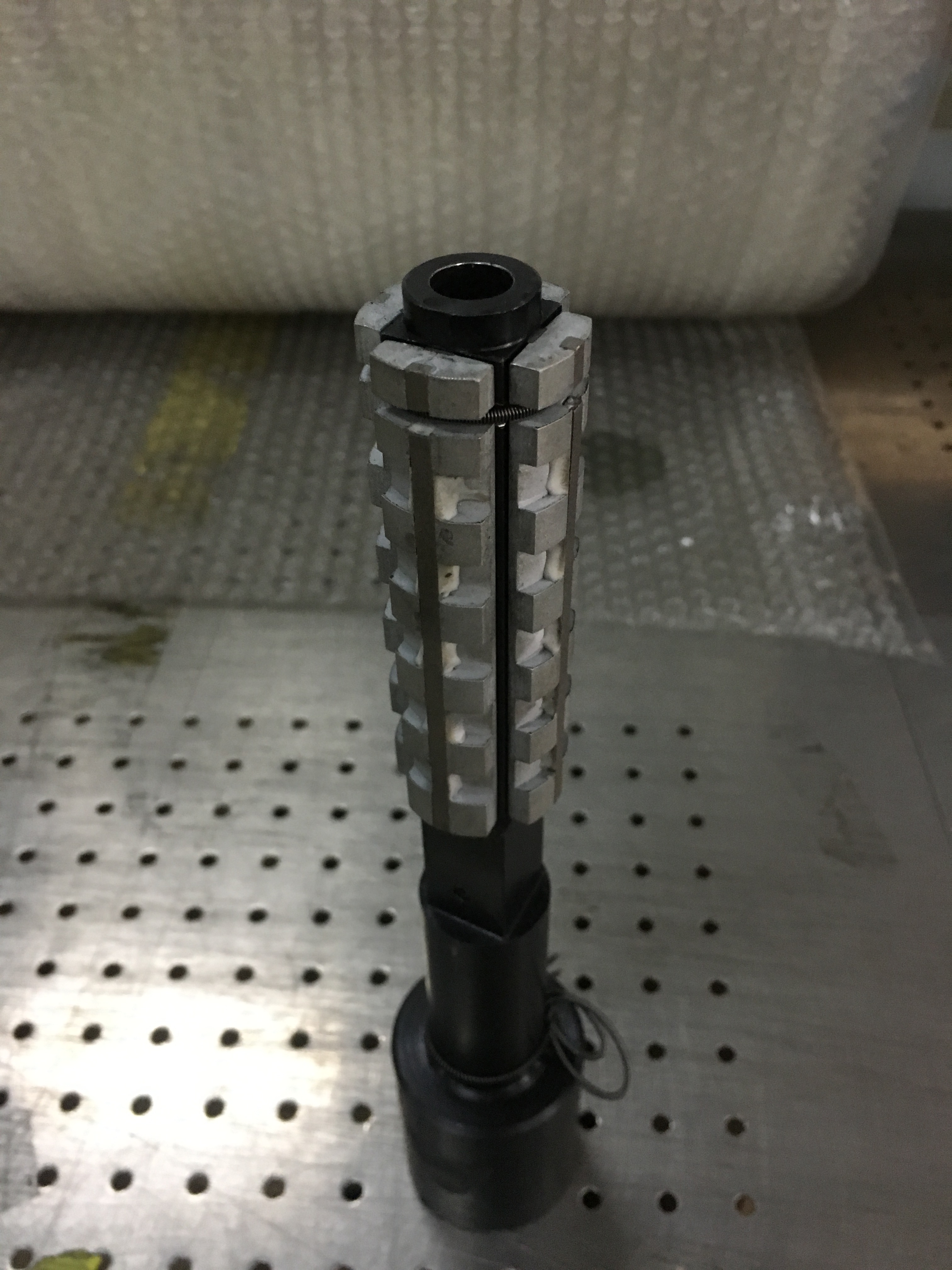
Vertical honing machines are essential equipment for honing processes, widely used in metal processing, tool manufacturing, and other fields. The honing head, as a key component, significantly impacts processing efficiency and finished product quality. This article will detail the design considerations and processes for honing heads to help readers better understand and apply them in actual production.
Design Highlights
1. Material Selection: Honing heads need to have good rigidity and wear resistance. High-speed tool steel and cemented carbide are usually selected to ensure that the honing head is not easily deformed or worn during long-term operation.
2. Structural Design: The structural design of a honing head should take into account its mechanical properties during the machining process. A honing head typically consists of a tool holder and cutting inserts. The inserts can be single-edged or multi-edged, and the specific structure depends on the honing material and dimensions.
3. Blade shape: The shape of the blade has a significant impact on the machining effect and the quality of the finished product. Honing head blades can be designed in different shapes, such as flat blades, spherical blades, angled blades, etc., and can be selected according to machining requirements.
4. The blade fixing method and the connection between the blade and the handle should be secure and reliable to prevent loosening or falling off during high-speed rotation. Clamping or screw fixing methods are usually used.
5. Cooling System: During honing, a large amount of heat is generated, affecting the life of the cutting tools and the machining quality. Therefore, a cooling system needs to be considered in the design, using spray cooling or lubrication cooling to reduce the temperature.
Design process
1. Determine machining requirements. Before designing a honing head, it is necessary to first clarify the machining requirements. This includes the material to be machined, the machining dimensions, and the required precision.
2. Select the blade type. Choose the appropriate blade type according to the machining requirements, such as a flat blade or a spherical blade.
3. Design the blade shape. Based on the blade type and processing requirements, design the blade's shape and dimensions. Considering processing efficiency and finished product quality, the blade's cutting edge angle, cutting edge length, and other parameters need to be designed appropriately.
4. Tool holder design. When designing a tool holder, factors such as the blade fixing method and the rigidity of the tool holder need to be considered. The length and diameter of the tool holder also need to be selected appropriately based on the material and dimensions being machined.
5. Consider the cooling system. Design the cooling system, determining the coolant supply method and spray locations. Ensure the coolant can adequately reduce the temperature during processing.
6. Conduct simulations and tests. Virtual simulations and experimental tests can be performed before actual production. Simulations are conducted using computer-aided design software to verify the rationality of the design. Simultaneously, experimental tests can be performed to verify the performance and effectiveness of the designed honing head in actual machining.
7. Optimization and Improvement. Based on the simulation and testing results, optimize and improve the design. This may require adjusting the blade shape, cutting edge angle, or improving the cooling system to achieve better machining results.
As a core component of a vertical honing machine, the design of the honing head has a significant impact on processing efficiency and finished product quality. Therefore, when designing a honing head, it is essential to strictly control all parameters and follow the correct design procedures.
 Lily
Lily